
Bear Robotics to Acquire Kinisi Robotics, Completing Its End-to-End Physical AI Robotics Platform
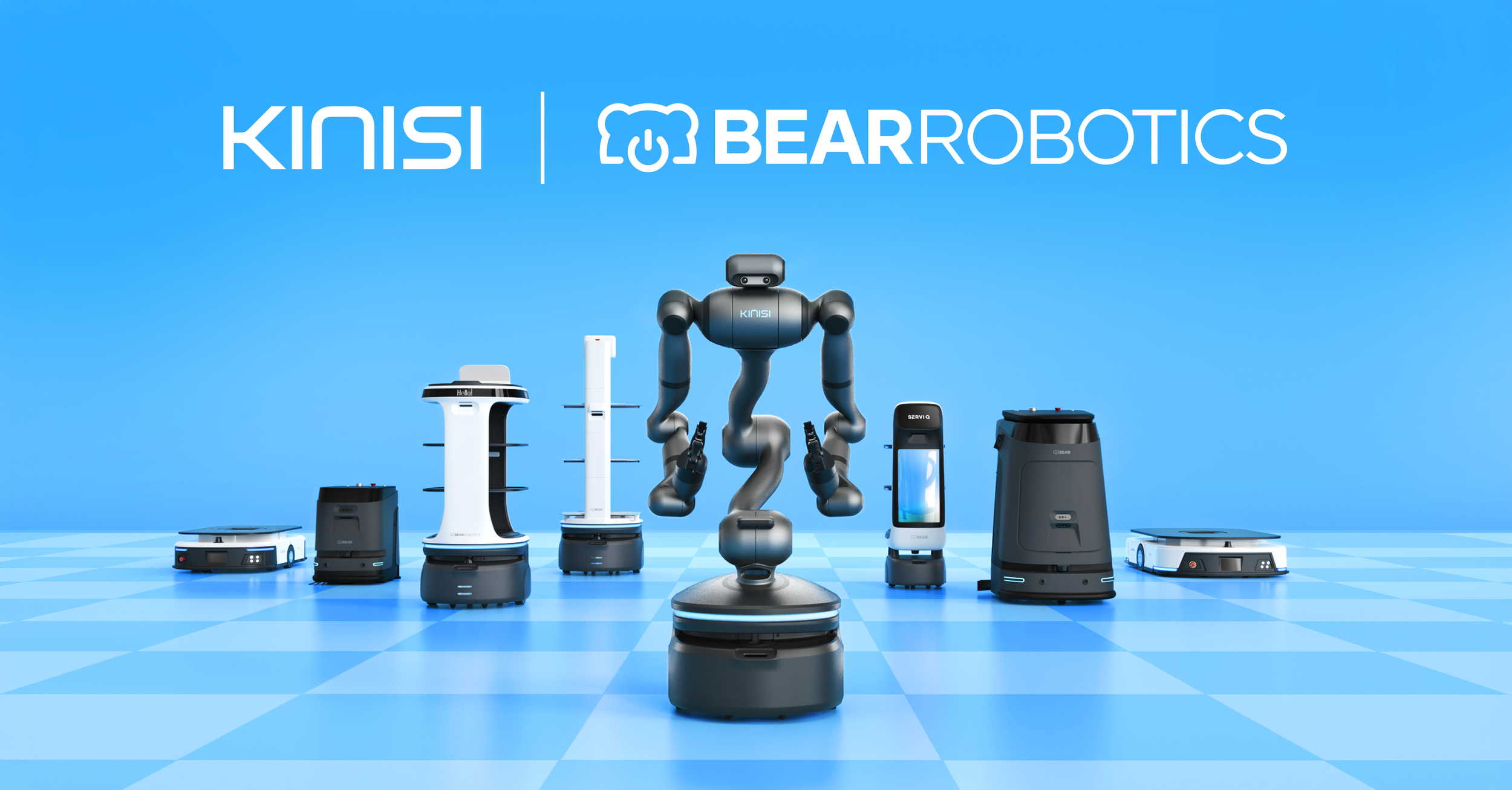
Bear Robotics today announced it has signed a definitive agreement to acquire Kinisi Robotics, the Bristol-based humanoid and Physical AI startup behind the KR1 robot. The deal adds advanced manipulation intelligence to Bear's production robotics platform and marks a decisive step toward general-purpose robots that don't just move through the world, but act on it.
It's a milestone the two teams have, in many ways, been building toward for years — and it completes the Physical AI platform Bear set out to build from the start.
From autonomous service robots to general-purpose Physical AI
Bear began nine years ago in a Silicon Valley restaurant, with a simple goal: take the physical strain out of hospitality. That idea grew into the world's most widely deployed fleet of autonomous service robots — more than 16,000 shipped into commercial service across North America, Europe, and Asia, carrying, cleaning, and delivering in restaurants, hotels, hospitals, warehouses, and high-rises.
But moving through a space is only half of physical work. The other half is handling the world — picking, placing, sorting, and manipulating the objects in it. That's the harder problem, and the one Kinisi has spent years solving. Acquiring Kinisi adds that missing manipulation layer, so the same fleet customers already rely on can move from navigating and delivering to performing real physical tasks — the defining capability of a general-purpose robot.
A partnership, not a bolt-on
This isn't a case of attaching someone else's robot arm to Bear's machines. Kinisi was built on Bear's production navigation stack from its earliest days — the same technology that powers Bear's commercial fleet today — so the two companies have effectively been working together since Kinisi was founded.
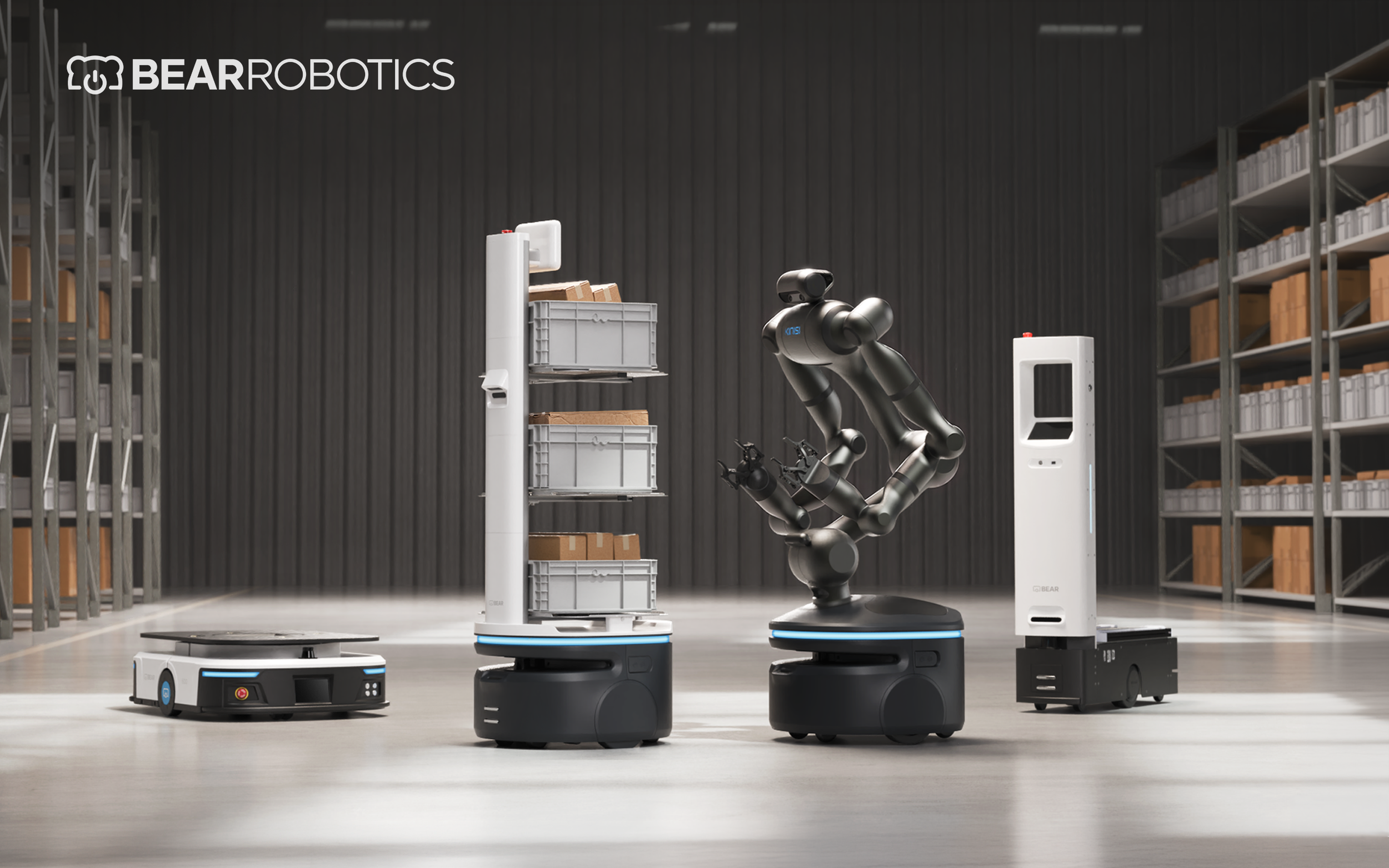
That history matters. Bear's delivery robots, floor cleaners and autonomous mobile robots (AMRs), and — with Kinisi — humanoids all run on one platform and work as a single coordinated team through agentic multi-robot orchestration, rather than a patchwork of products stitched together after the fact. Kinisi's manipulation AI extends that same platform; it doesn't sit beside it.
It also reunites Bear with a familiar face: Brennand Pierce, a co-founder of Bear and the founder of Kinisi, who returns to lead the combined engineering effort as Bear's Chief Robotics Officer on closing.
What Kinisi brings to Bear's Physical AI platform
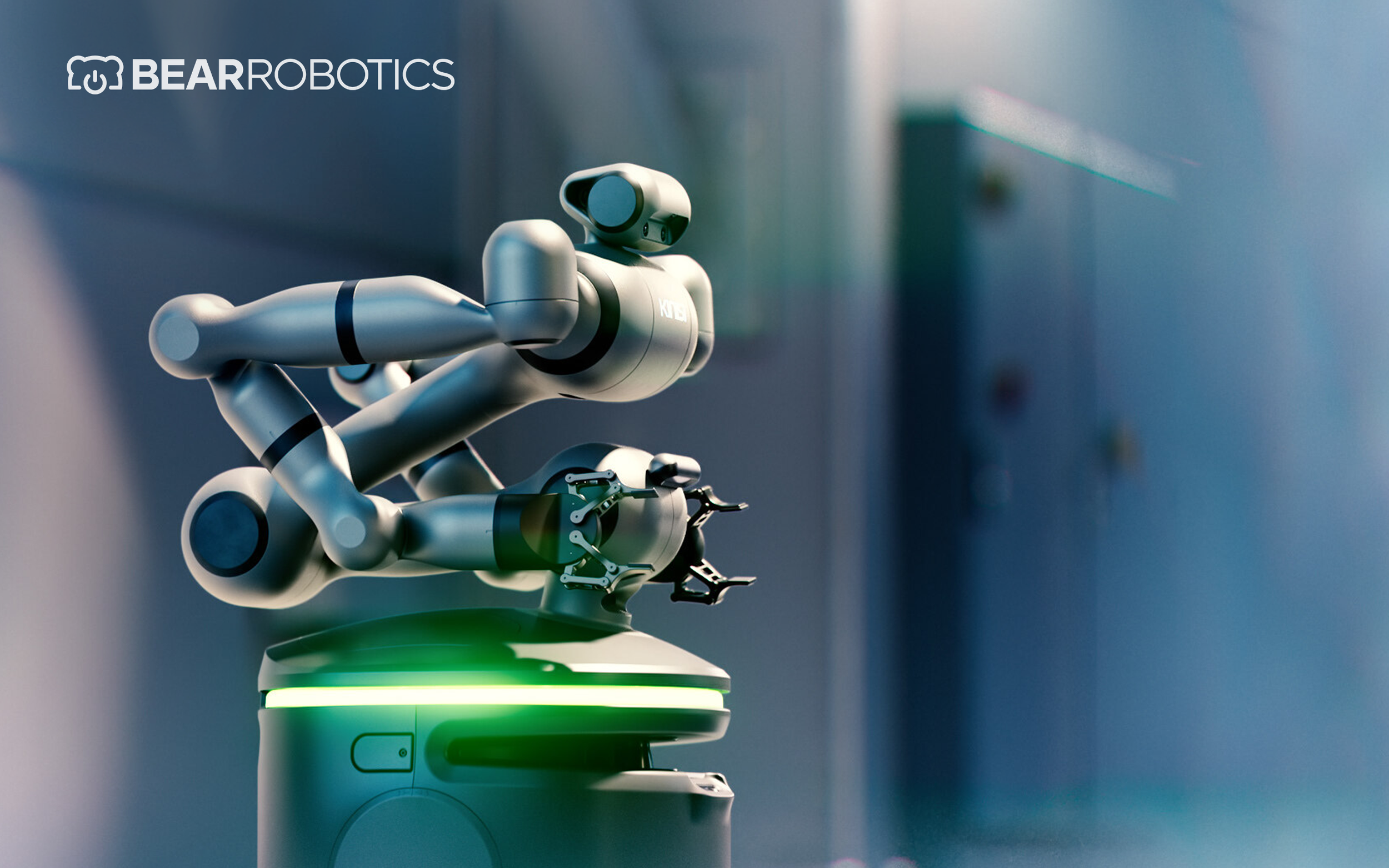
The KR1 humanoid robot — a wheeled humanoid designed to pick, place, sort, and move objects across industrial, logistics, and hospitality environments.
Proprietary manipulation AI — a Vision-Language-Action (VLA) model and a Robot Foundation Model (RFM) spanning imitation learning, reinforcement learning, agentic task control, and computer vision.
In-house gripper and end-effector design, plus a low-cost glove that lets people capture manipulation demonstrations by hand — a fast, inexpensive way to grow the training data the models learn from.
A world-class Physical AI team of engineers and researchers, including talent from the University of Oxford and the University of Cambridge.
A European engineering hub in Bristol, extending Bear's footprint into the UK alongside its Bay Area home.
Inside Kinisi's Physical AI: VLA and the Robot Foundation Model (RFM)
At the core of the KR1 are two models that define modern Physical AI. The Vision-Language-Action (VLA) model lets the robot connect what it sees and is asked to do with the physical actions it takes, while the Robot Foundation Model (RFM) gives it general manipulation skills that transfer across tasks and environments. A member of the NVIDIA Inception program for cutting-edge AI startups, Kinisi develops these models on the NVIDIA stack — and pairing them with Bear's deployed fleet is what turns isolated capability into a scalable, general-purpose robotics platform.
The Physical AI data flywheel
The deeper advantage is data. Bear's deployed fleet generates a constant stream of real-world operating data from thousands of commercial sites. Kinisi's hands-on capture tools add manipulation examples quickly and cheaply. Together they train better models faster than either company could alone — and better models make better robots, which deploy more widely, which generate more data. That loop is the engine of Physical AI, and few companies have both halves of it. Bear now does.
In one step, Bear gains manipulation technology and a research bench that would have taken years to build from scratch.
What it means for customers and partners
Until the transaction closes, Bear Robotics and Kinisi Robotics continue to operate as separate, independent companies, and every existing relationship, pilot, and point of contact continues unchanged.
On closing, customers get more capability on the same platform they already use — with Bear's full operational backbone behind every deployment: manufacturing, fleet management, installation, and support. For Kinisi's customers, in-flight pilots continue without interruption, now with Bear's scale behind them.
See the KR1 humanoid at Automate 2026
The timing is no accident. Bear is at Automate 2026 in Chicago (June 22–25), showing its robot lineup alongside a live demonstration of Kinisi's KR1 humanoid — the first public look at where the combined Physical AI platform is headed.
The bigger picture
Most robotics companies are still working to get from a promising pilot to a real product. Bear is coming from the other direction: it already has the deployments, the customers, the manufacturing, and the data. Kinisi adds the one capability that turns a deployed fleet into a platform that can automate physical work end to end — and moves the industry one step closer to truly general-purpose robots.
Nine years ago that journey started with a single robot in a restaurant. Today it takes its biggest step yet.
About Bear Robotics
Bear Robotics was founded in Silicon Valley in 2017 by former Google engineers who set out to take the physical strain out of hospitality — an idea that began in founder and CEO John Ha's own restaurant. Nine years later, Bear has grown that idea into a full-stack Physical AI platform: its own robots, agentic multi-robot orchestration, and the real-world data they generate — now automating everyday physical work across hospitality, healthcare, retail, logistics, and multi-story real estate in North America, Europe, and Asia. Learn more at www.BearRobotics.ai.
This post relates to a transaction that has been signed and is expected to close in the coming days; it remains subject to customary closing conditions.